29/07/2026
Capturing Young People’s Attention to News within Digital Environments of Dynamism and Social Interaction
Young People’s Disinterest from News Signals the Need for Proximity Strategies through Short Formats, While Raising Questions about Informational Depth
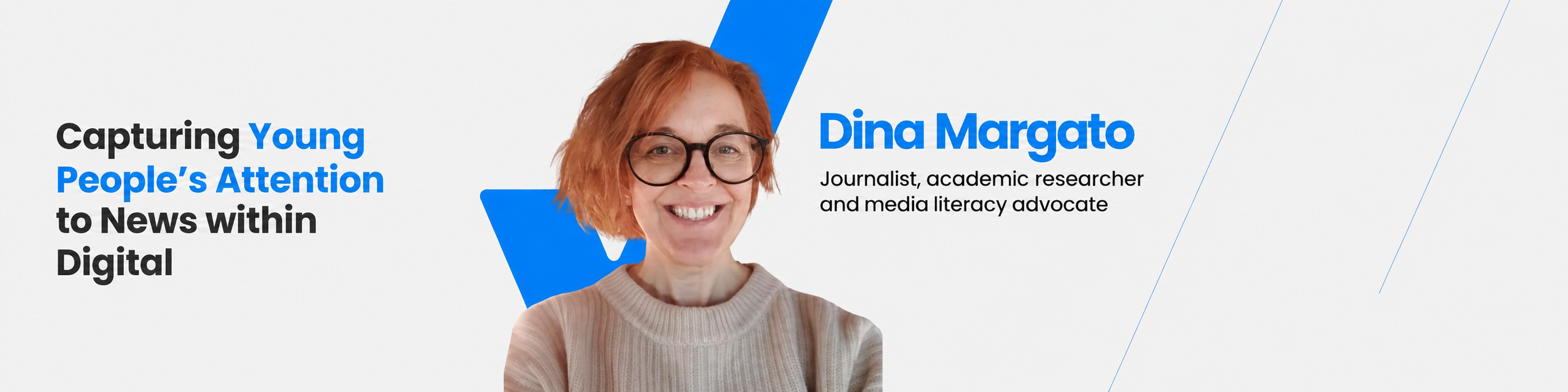
By Dina Margato
The article “Extremely Loud and Incredibly Close, Microdramas Are the Series of the Moment”, published on 9 March 2026 in the newspaper Público, highlighted the strategy of the Portuguese public broadcaster RTP in producing micro-series for mobile consumption. The plan involves exploring, in terms of format, vertically oriented imagery and, in terms of content, simple, engaging, short and easily assimilable narratives, suited to a generation that prefers social media and mobile devices. Fiction thereby reaches young audiences in a different way: it has adapted its “outfit”, placing itself in their pockets through the mobile phone, from which they are inseparable.
The transformation of fiction into a highly condensed, rapidly consumed model, presented in vertical format, has, however, generated controversy. A synthesis of readers’ comments on the Público website reveals that such innovation is often regarded as misguided, with suggestions that it reinforces a concerning consumption trend. In general, readers reject this format when applied to television fiction, designed for mobile delivery in line with content produced for online social media platforms such as Instagram.
Indeed, the majority of young people report little interest in news; specifically, 61% of Portuguese individuals aged between 18 and 24 (Cardoso et al., 2025). This disengagement is particularly pronounced in relation to topics traditionally considered relevant (Brites et al., 2017). Additionally, a pattern of news avoidance is observed among 34% of young people, motivated by content related to wars and conflicts (30%), which negatively affects their mood (29%) (Gustavo et al., 2025). Young audiences frequently describe news as sad, frightening, and even boring (Castro et al., 2024).
In contemporary contexts, young people’s relationship with media content has been profoundly transformed by the expansion of social media, and it is within this framework that their contact with news must be understood. At present, young audiences also display a strong preference for concise and visual formats, mirroring the models that characterise social media platforms (Margato et al., 2025).
In March 2026, an international study released by the Reuters Institute, covering nine countries (Robertson et al., 2026), indicated that 39% of young people use social media as their primary source of news, compared to 21% in 2015 among the same age group (18–24). Another finding highlights that young people tend to access news casually and show a preference for platforms such as Instagram (30%), YouTube (23%), and TikTok (22%). It is also noteworthy that those who rely on social media for news tend to pay greater attention to influencers than to traditional journalists.
Earlier studies had already pointed in this direction. Young people’s exposure to news increasingly occurs through the “news-finds-me” process (Gil de Zúñiga et al., 2017), in an accidental and incidental manner interspersed with leisure activities (Boczkowski, Mitchelstein & Matassi, 2018; Fletcher & Nielsen, 2018). A proportion of users also prefer encountering news through a “scroll news” model (Margato et al., 2025). This configuration reinforces the notion that information consumption has become progressively fragmented and embedded within multitasking digital routines (Boczkowski, Mitchelstein & Matassi, 2018).
Recent research further explains why young people prefer news within social media environments. Specifically, this preference is attributed to the structural characteristics of these platforms (Margato et al., 2025). Young users recognise a level of dynamism absent from traditional news websites, as well as an energy and liveliness associated with the broader content ecosystem. They report being attracted by the perceived vitality and human pulse embedded within social media feeds. Simultaneously, they value the potential for interactivity and the ability to observe others’ activities (Margato et al., 2025). Collectively, these features allow them to engage with emotional and relational dimensions that are largely absent from traditional news sites, where even comment sections are often restricted to subscribers.
This observation confirms that social media platforms are used by young people as spaces for socialisation, entertainment, and information (Aichner et al., 2021; Feio & Oliveira, 2025). These platforms play a fundamental role in their lives by combining social, romantic, familial, and professional dimensions (Aichner et al., 2021), while simultaneously functioning as autonomous environments for media consumption (Russmann & Hess, 2020). Furthermore, within the contemporary media ecosystem, attention has become a scarce resource, compelling content producers to develop shorter and more visually appealing formats (Davenport & Beck, 2001; Newman et al., 2023).
Adapting to young people’s media practices requires a detailed understanding of the digital routines that structure their everyday lives. Beyond social media, the smartphone occupies a central role, functioning as the primary interface for accessing information, communication, and entertainment. Research on mobile communication indicates that the portability and constant connectivity of these devices integrate media consumption into daily activities, from commuting on public transport to leisure moments or study breaks (Westlund, 2013).
Young people are thus choosing smartphones and social media as their main channels for staying informed about current affairs. Understanding this phenomenon is crucial, given that news content contributes to shaping public opinion (Klopfenstein Frei et al., 2022), and digital news consumption may influence political participation (Moeller et al., 2018).
In this context, the production of both fictional and informational content stands to benefit from an orientation towards formats compatible with mobile consumption logic. Strategies centred on vertical video, short narratives, and interfaces adapted to continuous scrolling reflect attempts to align media production with emerging behavioural patterns.
It is therefore essential to recognise the significant role social media plays in bringing young people closer to news. For many users, these platforms serve as entry points into the informational sphere. The presence of journalists, news organisations, and specialised content creators on social media contributes to diversifying modes of information presentation and to experimenting with new narrative formats adapted to digital logics.
The relationship between young people and contemporary media is characterised by the intersection of social media use and mobile device reliance. The observation that many young individuals encounter news through social media underscores the centrality of these platforms within the current information ecosystem.
In this context, understanding young people and news consumption requires acknowledging that access to information and entertainment increasingly occurs within hybrid environments, where the boundaries between different types of content are blurred, while social media simultaneously functions as a space of sociability.
For journalism, this presents an opportunity to innovate and develop strategies capable of producing high-quality, engaging information that stands out amid a multitude of multifaceted content, while preserving rigour. Social media proves more effective in attracting young audiences to news due to its dialogical, emotional, interactive, and dynamic dimensions, which traditional websites struggle to replicate.
However, this greater effectiveness also raises important concerns. Notably, it creates a need for users to distinguish between informational content, entertainment, and even advertising (Swart & Broersma, 2022). Within journalism, it prompts debate regarding the quality of highly condensed information, as such formats may privilege superficial or emotionally appealing content at the expense of depth (Margato et al., 2025). Moreover, these contents must contend with algorithmic pressures that may shape what is effectively shown to young audiences. From a commercial perspective, this approach also faces the challenge of identifying sustainable advertising revenue models, given that social media platforms are owned by large corporations that profit from their use.
Despite these contextual challenges, the adoption of micro-formats in vertical video and short narratives reflects an effort to align media production with the habits of increasingly digital and mobile audiences. As with fiction, attracting young people to news similarly depends on journalism’s ability to adapt to new formats and models, as well as to the digital and emotional logic familiar to younger generations.
References
Aichner, T., Grundelder, M., Mauer, O., & Jegeni, D. (2021). Twenty-Five Years of Social Media: A review of Social Media Applications and Definitions from 1994 to 2019. Cyberpsychology, Behaviour, and Social Networking, 24, 215–222. https://doi.org/10.1089/cyber.2020.0134
Boczkowski, P., Mitchelstein, E., & Matassi, M. (2018). “News comes across when I’m in a moment of leisure”: Understanding the practices of incidental news consumption on social media. New Media & Society, 20(10), 3523–3539. https://doi.org/10.1177/1461444817750396
Robertson, C. T., Arguedas, A. R., Mukherjee, M., & Fletcher, R. (2023). Understanding young news audiences at a time of rapid change. Reuters Institute for the Study of Journalism. https://doi.org/10.60625/risj-r08r-mt26
Cardoso, G. (2023). A Comunicação da comunicação, as pessoas são a mensagem. Mundos Sociais.
Cardoso, G., Paisana, G., & Pinto-Martinho. (2025). Digital News Report Portugal 2025, OberCom Observatório da Comunicação. https://doi.org/10.5281/zenodo.1559907
Castro, T. S., Brites, M. J., & Maneta, M. S. (2024). Milestone 5: Data analysis systematization. YouNDigital – Youth, News and Digital Citizenship. [Universidade Lusófona – CICANT.]. https://doi.org/10.54499/PTDC/COM-OUT/0243/2021
Couldry, N., & Hepp, A. (2017). The Mediated Construction of Reality. Polity Press
Davenport, T., & Beck, J. (2001). The Attention Economy. Harvard Business School Press
Feio, C., & Oliveira, L. (2025). Scrolling Through the Feed—How do Young People in Portugal Consume News on Social Media? Observatório (OBS*), 19 (5). https://doi.org/10.15847/obsOBS19520252670
Fletcher, R., & Nielsen, R. K. (2018). Are people incidentally exposed to news on social media? A comparative analysis. New Media & Society, 20(7), 2450–2468. https://doi.org/10.1177/1461444817724170
Gil de Zuñiga, H., Weeks, B., & Ardévol-Abreu, A. (2017). Effects of the news-Finds-Me Perception in Communication Social Media Use Implications for News Seeking and Learning About Politics. Journal of Computer-Mediated Communication, 22 (3). https://doi.org/10.1111/jcc4.12185
Jenkins, H. (2006). Convergence Culture: Where Old and New Media Collide. New York University Press
Newman, N. et al. (2023). Digital News Report. Reuters Institute for the Study of Journalism.
Klopfenstein Frei, N., Wyss, V., Gnach, A., & Weber, W. (2022). “It’s a matter of age”: Four dimensions of youths’ news consumption. Journalism, 25(1), 100–121. https://doi.org/10.1177/14648849221123385
Moeller, J., Kühene, R, & de Vreese, C. H. (2018) Mobilizing youth in the 21st century: How digital media use fosters civic duty, information efficacy, and political participation. Journal of Broadcasting & Electronic Media, 62(3), 445–460. https://doi.org/10.1080/08838151.2018.1451866
Swart, J., & Broersma, M. (2022). The Trust Gap: Young People’s Tactics for Assessing the Reliability of Political News. International Journal of Press/Politics, 27(2), 396–416.
https://doi.org/10.1177/1940161221100669
Westlund, O. (2013). Mobile news: A review and model of journalism in an age of mobile media. Digital Journalism 1(1), 6-26. https://doi.org/10.1080/21670811.2012.740273
Note: This article is an automatic translation of the original text written in Portuguese. In case of any discrepancies or differences in meaning, the original version (in portuguese) should be consulted.
Professional profile
Aldina Maria da Silva Margato, who writes under the name of journalist Dina Margato, is a researcher in the field of media and has been studying the reinvention of journalism. She is currently completing a PhD in Communication Sciences, is a visiting lecturer on the Journalism degree programme at the Instituto Superior Miguel Torga, and is part of the team of the Iberian Digital Media Observatory project. Dina Margato worked as a journalist at Jornal de Notícias, where she held various positions, and has also contributed to the newspaper Expresso.